

OEC Certified Repair Network
Consistent, efficient, and quality repairs are now the easy part with OEC Certified Repair Network (CRN). OEC CRN solutions provide tools and resources to help collision repair facilities, vehicle manufacturers, and insurance companies support safe and proper vehicle repairs.
As vehicle technology advances, so does the complexity of repairs. Technicians face increasingly tougher challenges as emerging vehicle technology, construction methodology, and new materials are introduced to their day-to-day work experience. Sound complicated? It is, and that’s why OEC CRN solutions provide the necessary tools and resources to help the industry consistently and efficiently make quality, safe repairs easier.
Optimize Your Processes for Operational Efficiency
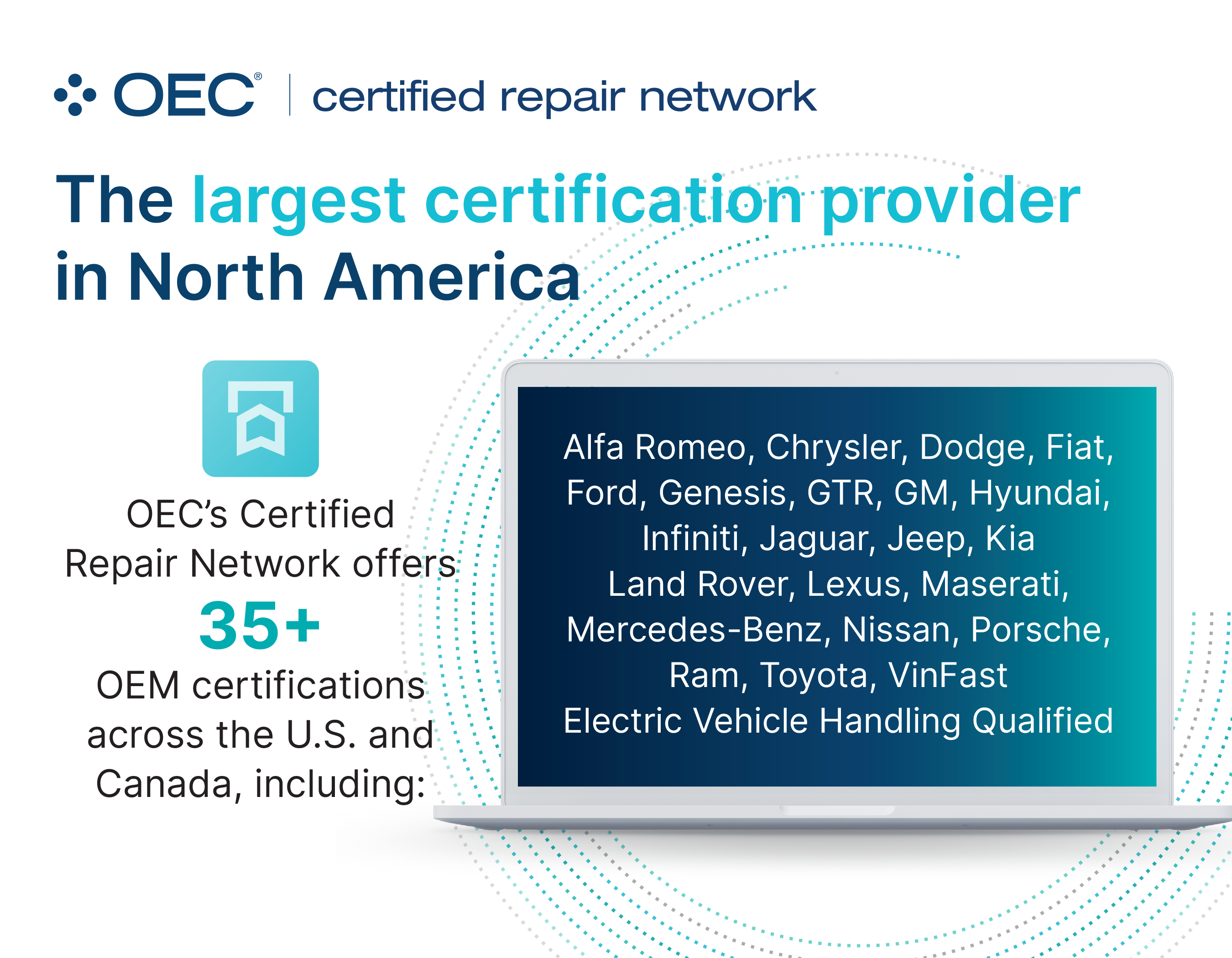
The OEC Certified Repair Network is the largest certification provider in North America, offering 35+ OEM Certification Programs. OEC CRN solutions provide collision repair facilities with the following:

Certification Benefits
- Offer a competitive differentiator through OEM recognized certifications
- Reduce liability through proper tooling, equipment, education, and use of OEM repair procedures
- Gain referrals through OEM certified shop locators
- Access tools, resources, and training

Consultative Services & Coaching Benefits
- Improve business operations using consultative services – Repair Planning & Consulting and Quality Coaching
- Increase profitability and other key performance indicators through process, optimization, and benchmarking
- Adopt industry best practices

OEM certifications across the U.S. and Canada, including:
Alfa Romeo, Chrysler, Dodge, Fiat, Ford, Genesis, GTR, GM, Hyundai, Infiniti, Jaguar, Jeep, Kia, Land Rover, Lexus, Maserati, Mercedes-Benz, Nissan, Porsche, Ram, Toyota, VinFast, Electric Vehicle Handling Qualified.
Value for Customers
Drivers choose automotive brands for many reasons: style, prestige, value, functionality… But buyers all have the same expectation for the repair: knowing that once a vehicle is repaired, it will look & perform the same as when they first drove it home.
Click below for more insights into how OEC connects people in the collision repair industry through one common goal: enhancing consumer safety.
Featured Resource
Download Now: OEC CRN Brochure
Gain insights into the benefits of OEM certification & impact it can have your facility’s workflow, processes, and bottom line.
Speak to an expert today
Reach out for more information, questions or comments about any of our products or services.